
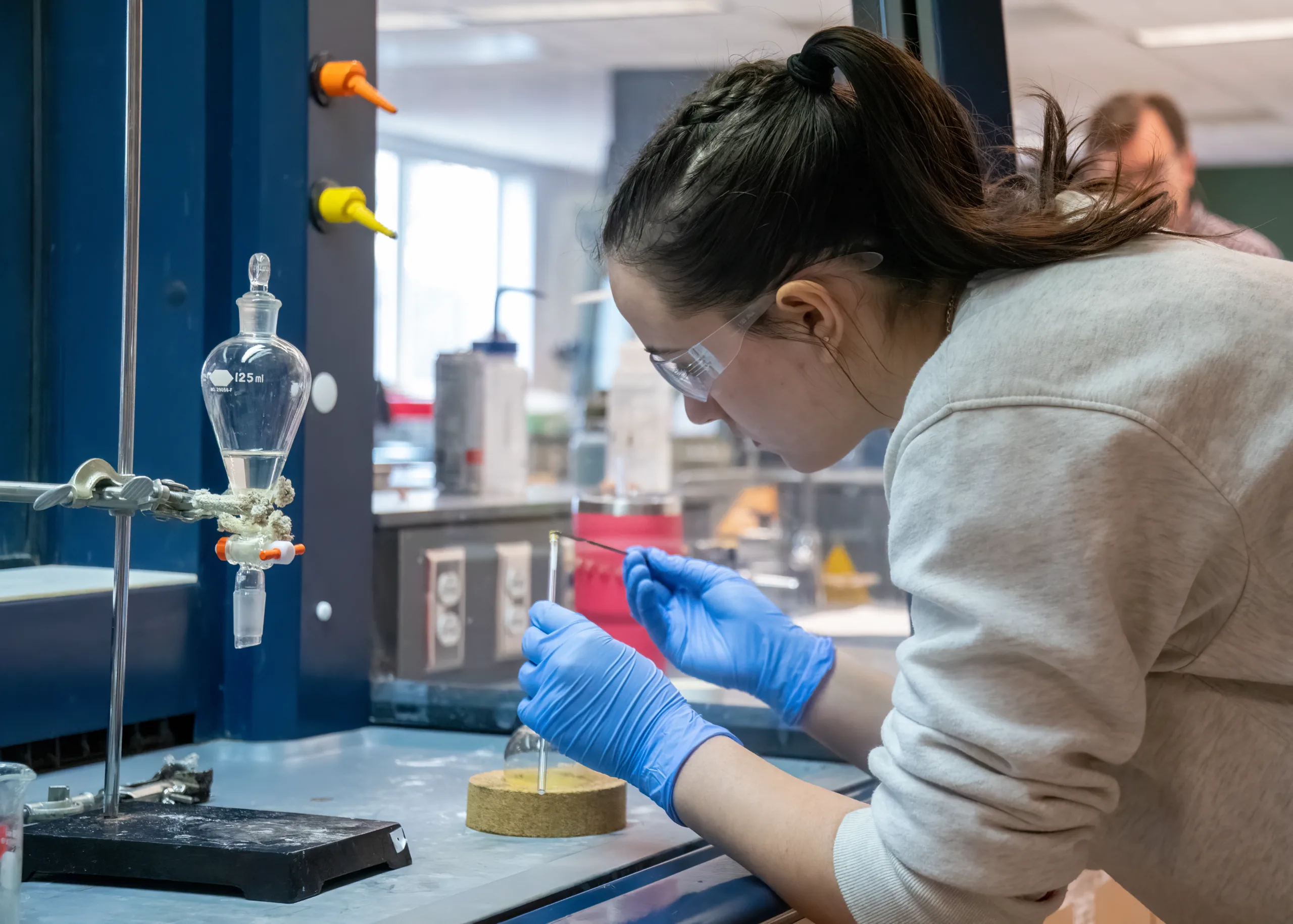
student in lab
Undergraduate

Pre-Clinical

Engage with Assumption’s outstanding science programs and strong liberal arts curriculum that prepare you for the rigors of graduate school and a successful career in the health sciences.

Assumption University’s Pre-Clinical Program is designed for students who aspire to careers in medicine (pre-med), dentistry (pre-dental), veterinary medicine (pre-vet), physician assistant studies (pre-PA), and other health-related professions. Our program offers personalized advising, rigorous academic preparation, and hands-on experiences that build the skills and confidence needed for success in professional school.

Why Choose Assumption for a Health-Care Pathway

A Holistic Approach to Preparing Future Physicians

Health profession schools look for academic excellence, personal character, service, leadership, and resilience. Assumption’s Pre-Clinical Program helps students build all elements of a strong and authentic application—while ensuring they grow as compassionate and ethical future healthcare professionals.


Your Path to A Health Professions School Starts Here

With individualized attention, exceptional faculty, and a supportive campus community, Assumption University provides the ideal environment for students aspiring to careers in the health professions.


The Pre-Clinical Advising program offers:

  • Personalized advising from your first year through to your professional-school application.
  • A strong liberal-arts + sciences foundation via the major in Biology, Biotechnology and Molecular Biology or Pre-Clinical Health Science, designed to prepare you for graduate study in many clinical health professions.
  • Access to hands-on, experiential learning opportunities—clinical observation, internships, research—in the Worcester/New England region’s health-care community.
  • A small-class environment (11 : 1 student/faculty ratio) ensuring you engage directly with professors who are committed to your success.

Whether you’re aiming to become a physician, dentist, physician assistant, physical/occupational therapist, veterinarian, or pharmacist or another health professions professional, our Pre-Health Professions Advising office will guide you through:

  • Academic Planning — You’ll choose your major (for example, our Pre-Clinical Health Science major) and map prerequisite coursework, review GPA strategies, and align your curriculum with professional-school expectations.
  • Experiential Learning — We’ll help you identify and secure shadowing, service, research, or internship experiences early to build a strong profile.
  • Professional-School Preparation — We provide guidance on entrance exam preparation (MCAT, DAT, OAT, GRE, etc.), application timelines, interview preparation, and choosing appropriate schools.
  • Self-Reflection & Career Fit — We help you explore your motivations, interests, and professional fit in the health-care field, so that you go beyond the “pre-health profession” label to a pathway aligned with your strengths and values.


Dedicated Advising

Students in the Pre-Clinical Program receive comprehensive guidance from faculty and advisors who understand the health professions school admissions process. Support includes:

  • One-on-One Academic Planning: Tailored course recommendations that align with your health profession prerequisites and your major of choice.
  • Professional School Guidance: Clear timelines, application support, and personalized strategies for a competitive application.
  • Mock Interviews: Practice interviews to build confidence and strengthen communication skills.
  • Committee Letters: Support from the university’s Pre-Health Committee, including a composite letter of recommendation when appropriate.

Competitive Academic Preparation

Assumption offers rigorous coursework that forms a strong foundation for the health professions entrance exams (e.g., MCAT, DAT, OAT, etc.) and health professions graduate level coursework, including:

  • Biology, Chemistry, Organic Chemistry, and Biochemistry
  • Physics
  • Anatomy & Physiology
  • Calculus and Statistics
  • Psychology and Sociology
  • Ethics and Humanities coursework that supports holistic patient care

Faculty mentors help students succeed academically and prepare for the challenges of advanced study.
Program Contact

Steven Theroux, Ph.D

Professor of Biology
508-767-7545 Testa Science Center - Room 202

Choose from Three Academic Majors

Biology
Biotechnology and Molecular Biology
Pre-Clinical Health Science

Four Year Advising Checklist

  • Academics

    • Meet with your pre-health advisor to map out your four-year plan.
    • Enroll in foundational courses: Concepts of Biology, Genetics, General Chemistry I & II, Pre-Calculus or Calculus, Statistics, and core curriculum classes.
    • Establish strong study habits and aim for high academic performance (The GPA you earn early matters).
    • Connect with faculty mentors—relationships that will matter later.

    Experience & Exploration

    • Join the Pre-Health Society or related student organizations.
    • Begin exploring volunteer opportunities in healthcare or community settings.
    • Attend pre-health information sessions, panels, and workshops.
    • Begin keeping a journal of clinical and volunteer experiences for future applications.

    Planning Ahead

    • Review prerequisites for program of interest
    • Explore summer opportunities (research, volunteering, entry-level clinical roles like EMT, CNA, or hospital volunteer).
  • Academics

    • Depending on your career goals, take Organic Chemistry I & II and Physics I & II or upper-level Biology courses
    • Continue meeting each semester with your pre-health advisor.
    • Assess your academic progress and create strategies for improvement if needed.

    Experience & Exploration

    • Increase clinical exposure through shadowing, internships, or part-time healthcare employment.
    • Continue volunteer work with a consistent commitment.
    • Consider beginning a research project with a faculty member.

    Career Planning

    • Attend admissions workshops for the health professions graduate programs.
    • Begin exploring graduate admissions exam (e.g., MCAT, DAT, OAT, etc.) content and determining a tentative test timeline.

    Network with alumni and local healthcare professionals.

  • Academics

    • Complete any remaining prerequisites.
    • Continue upper-level science courses that strengthen readiness for the graduate admission exams and graduate coursework in the health professions.
    • Meet regularly with your advisor to stay on track with your application.

    Health Professions Admission Exam Preparation

    • Begin formal graduate admission exam (e.g., MCAT, DAT, OAT, etc.) preparation.  This can be done via self-study or by enrolling in structured courses.
    • Take diagnostic and full-length practice exams.
    • Schedule your exam for late spring or early summer if applying after junior year.

    Experience & Professional Development

    • Take on leadership roles in organizations or service activities.
    • Expand research involvement and consider presenting or publishing.
    • Continue clinical exposure with depth and consistency.

    Application Preparation

    • Request recommendation letters from faculty and supervisors.   If you are applying to medical school or dental school, you can request a department letter by contacting the health professions advisor by the last day of class in your spring semester.
    • Draft your personal statement and activity descriptions.
    • Meet with your Pre-Health Advisor for guidance and timeline planning.
    • Prepare for committee interviews (if applicable).
    • Submit application during the summer following your junior year.
  • Career Planning & Transition

    • Compare offers and financial aid packages.
    • Attend health professions workshops on professionalism, communication, and transitioning to a health professions school.
    • Celebrate your accomplishments!

Graduate and Medical School Placement

Assumption has a strong track record of preparing students for graduate school in the health sciences, and our students have been accepted at numerous medical schools and health professions programs throughout the United States.

Bethel University

Boston University School of Dental Medicine

Cummings School of Veterinary Medicine at Tufts University

Massachusetts College of Pharmacy and Health Sciences

National Institutes of Health post-baccalaureate fellowship

St. Joseph's University, CT

UCONN Dental School

University of Massachusetts Medical School

University of Missouri Kansas City

University of New England College of Osteopathic Medicine

University of Pennsylvania School of Medicine

Yale University

See Assumption University In Person

From our state-of-the-art academic buildings and exceptional academic programs to our welcoming and supportive community, Assumption isn't just a university - it's the place you can call home. Visit us and see why.


Assumption is dedicated to providing a clear understanding of what your education will cost

We’ll help cut through the complexity of financing your education, ensuring you understand what you need, how to apply for aid, and what’s expected of you. You will be assigned a personal financial aid advisor who will guide you through the process and answer all of your financial aid-related questions.


Internships

To enhance your understanding of the health professions and increase the competitiveness of your graduate school applications, Assumption encourages pre-med students to engage in an internship. Assumption also offers a paid summer-research program for students. Worcester features innovative life sciences organizations and health care providers that seek motivated undergraduates to conduct research, observe patient care, and assist health professionals. Through an internship, you strengthen your knowledge, confidence, and professionalism, and you’ll also make important connections that may open doors to future careers. Some of the organizations Assumption students intern with include Blue Sky, Biotech, GLSynthesis Inc., Harvard University, New England Aquarium, Office of the Massachusetts Medical Examiner, Red Sox Assistant Medical Director and University of Massachusetts Medical School.

Partnership Programs

Assumption University has developed agreements with universities that enable Assumption students to receive undergraduate course credits and/or go on to highly regarded graduate programs. These agreements offer our students numerous opportunities for guaranteed admission and/or accelerated degrees or intensive study.

Programs Related to Pre-Clinical

Biology

Undergraduate

Chemistry

Undergraduate

Engineering Science

Undergraduate

Environmental Science

Undergraduate

Health Professions

Undergraduate

Neuroscience

Undergraduate

Physics

Undergraduate

Pre-Med and Pre-Dental

Undergraduate

Pre-Vet

Undergraduate