
Educating Across Continents: Assumption’s Argentina Program Continues to Thrive
As a well-told story goes, Father Román Heitmann, A.A., set out to establish a school for children in Buenos Aires, Argentina with one important tool: a canoe. The canoe allowed him to travel through the low-lying, swampy area of Buenos Aires to reach impoverished children of the district and teach them to read and write.
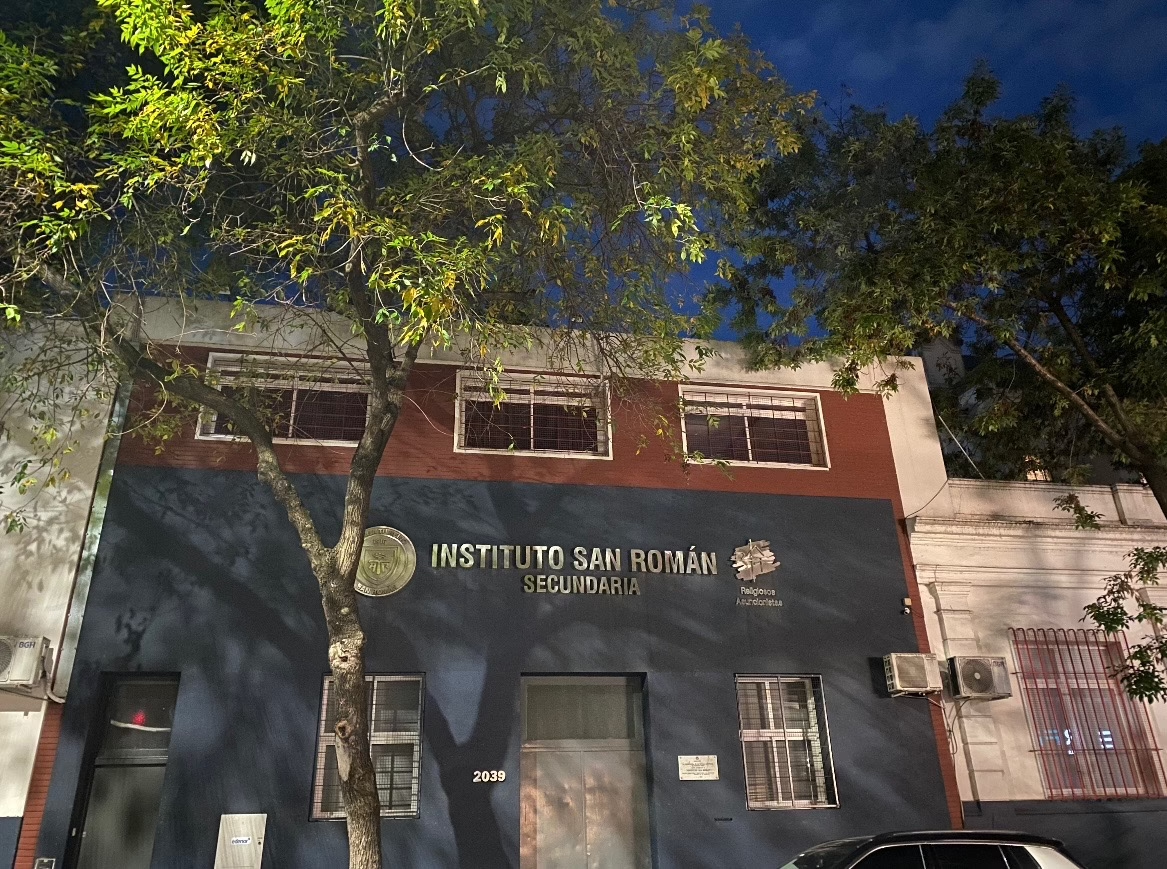
Fr. Heitmann’s efforts resulted in him founding three schools. In 1955, after Fr. Heitmann’s death, the San Román Institute, named for him, was founded, and was later expanded into a high school. Since 1992, the co-educational Instituto San Román, or San Román School, has formed students in the Assumptionist tradition.
Celeste Trotta, a Catechism teacher at the school, visited Boston with her husband in 2012 to reconnect with one of his friends from San Román. While in Massachusetts, they learned about Assumption University and how the two schools were founded by the same religious order—deciding that it would be a perfect opportunity for collaboration. With support and important contributions from Assumptionists Fr. Juan Carlos Marzolla, Fr. Dennis Gallagher, Fr. John Franck, and Fr. Richard Lamoureux, the program was made possible.
“It was clear from the start that we didn’t want this to be a tourism program, or just an academic program, or just a sports program,” Bernabela Villafañe, a fellow teacher at San Román, said. “It’s about the embodiment of the Assumptionist spirit, the bond between the two institutions, and the Assumptionist network around the world.”
In 2014, 42 students traveled for the first time from Buenos Aires to Worcester with Trotta and Villafañe to spend a month living and studying on Assumption’s campus. In the years since, that number has climbed to more than 400 in total. Trotta and Villafañe even say that students choose San Román for high school because of the Assumption program to get an early glimpse of higher education in the United States.
Each year, students, who are of similar age to American high school juniors, travel to Worcester for the month of July, staying on campus, taking classes, and going on day trips to experience American life, history, and culture. Excursions take students from as far as New York (where they are not allowed to purchase Yankees caps), to Old Sturbridge Village, to vibrant downtown Worcester to visit the Worcester Art Museum.
“It’s really a cultural immersion,” said Villafañe. “We ask for curiosity from students—to have an open mind and start accepting new experiences.”
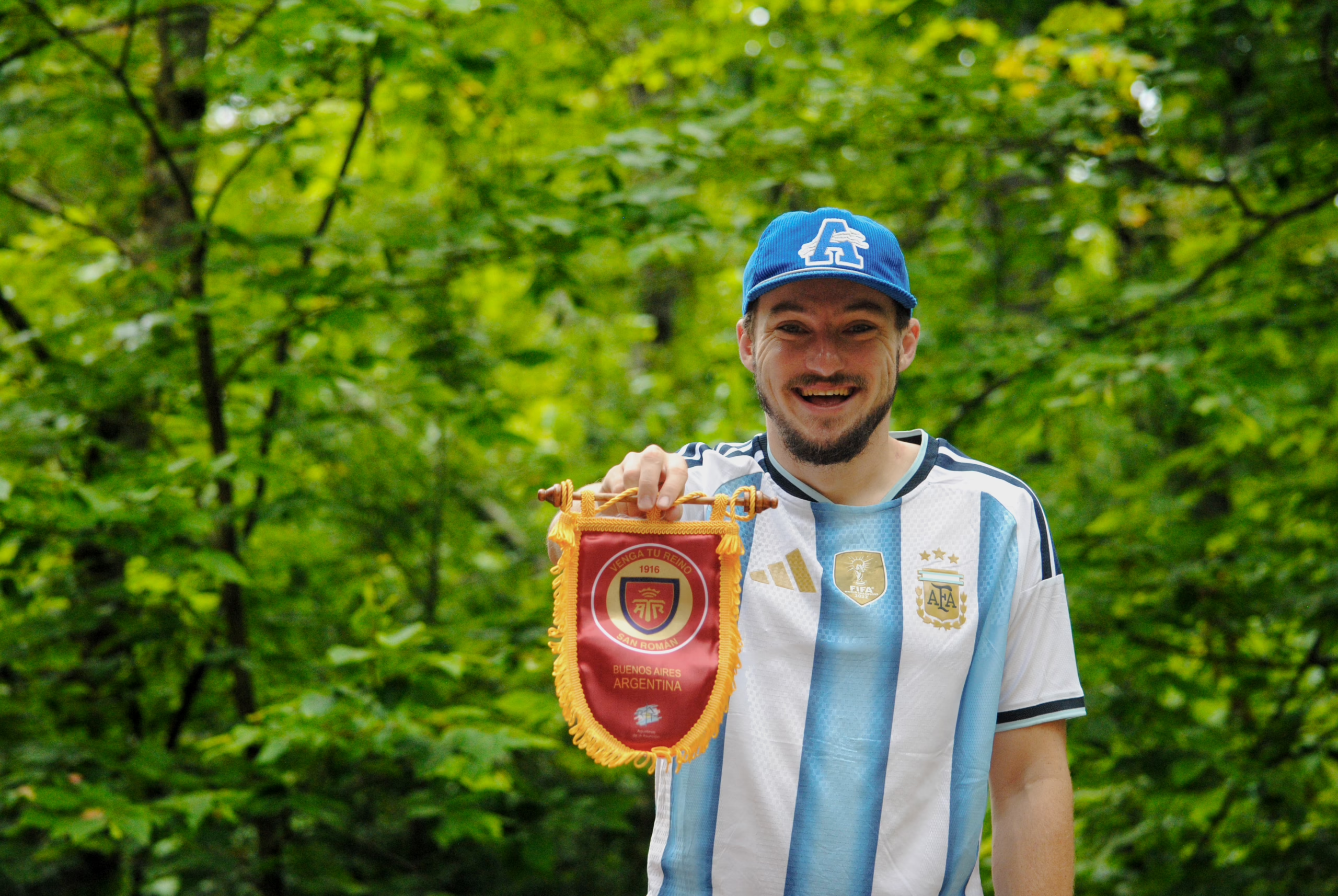
One of the classes students take is taught by Assumption alumnus Tom Angell ’20, who teaches sixth grade history in Shrewsbury, Massachusetts. It focuses exclusively on American culture—from the very meaning of “culture” to how American history impacts the continued creation of both visible and invisible culture in the country over time. Topics include the experiences of slaves in America, the Native American experience and the Trail of Tears, The Great Gatsby, and the Harlem Renaissance.
“Establishing a core foundation allows me to teach the history and be able to tie it back to culture in a stronger way,” he said. “They do a final project where they put together slides dissecting American culture and connecting it to the excursions they went on. One of the essential questions we ask is whether the ‘American Dream’ is a myth or not.”
“I was struck by how gracious, kind, and welcoming the staff and the students were to me, and they made me feel comfortable exploring my vocation even after my career had started,” said Angell, who has taught in the program since 2021. “I knew immediately: this experience has a lot of value and potential, and I was going to make some great connections.”
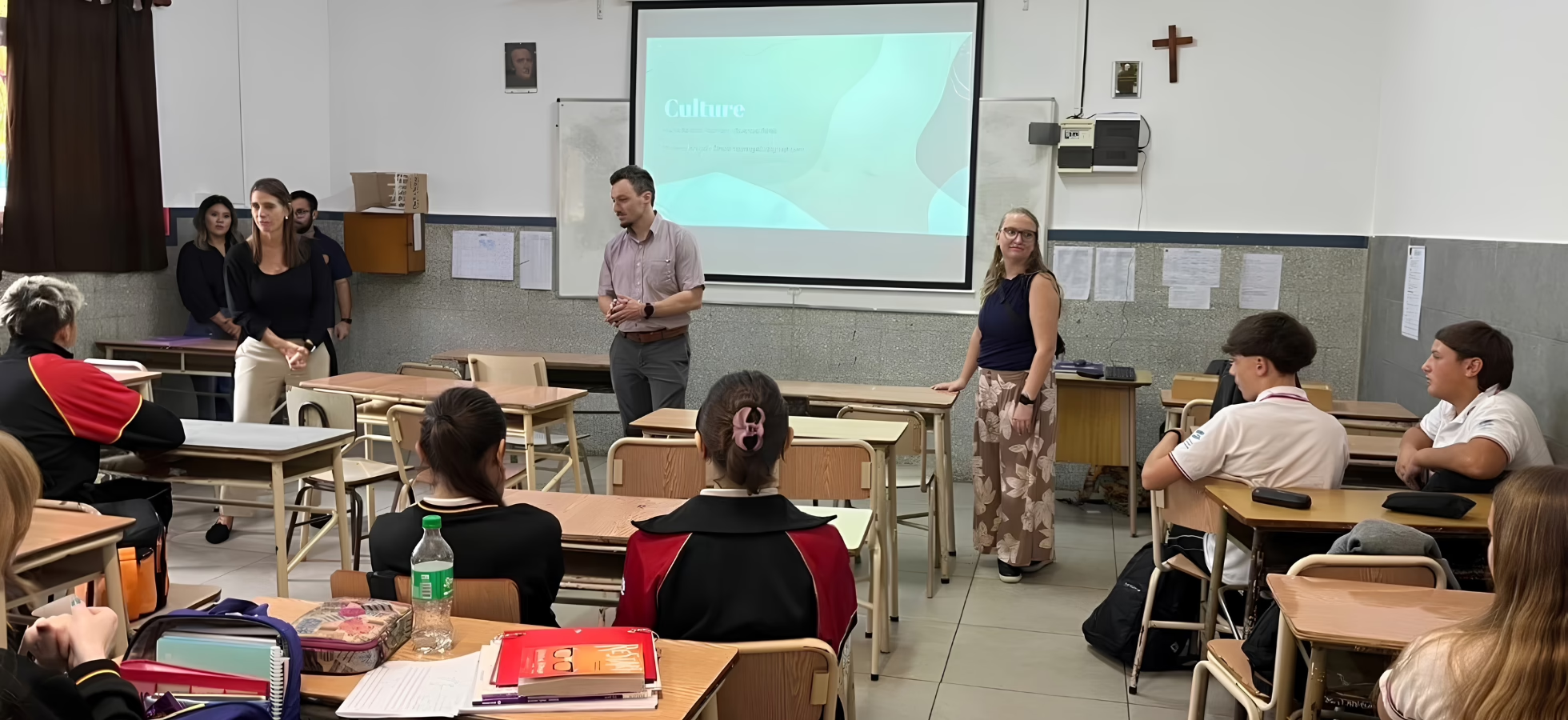
Earlier this year, Angell’s love for the program brought him to San Román in Argentina to teach another course on culture—this time, to a group of younger students.
“That opportunity was born out of the school’s openness to having me and me still having that Assumption connection,” Angell said. “Even though I graduated in 2020, Assumption was still able to help me forge this connection.”
Angell says that teaching the Argentine students, and his experience teaching in Argentina, taught him a lot about teaching in America and what he should bring back with him to his classroom in Shrewsbury.
“It reignites my own passion for teaching,” he says. “Every year, I keep coming back to the program—not just because of the hospitality that everyone shows, but because it reminds me why I do what I do. I get to teach while building relationships and exploring interesting topics.
The summer program’s success is because of the deep relationships teachers build with their students. “Tom’s love for Assumption and his vocational calling as a teacher give him a deep sense of purpose. Each year, I get to appreciate the meaningful connections and memories he builds with students,” said Professor of Spanish Esteban Loustaunau, Academic Coordinator for the summer program.
“Assumption did an amazing job of preparing me for this program by giving me the liberal arts foundation. I’m teaching in an intentional and reflective way that allows me to put myself in their shoes, to a degree. I come to teach every year with a sense of gratefulness,” Angell concluded.