

A Forensic CBT Primer: Identifying and Restructuring Criminogenic Thinking- Raymond Chip Tafrate, PhD.
CBT has been shown to be effective with antisocial and forensic clientele, although modifications of CBT practices are required for this client group. First, successful intervention requires a focus on a set of specific risk domains that facilitate criminal/antisocial behavior (beyond mental health symptoms). Step-by-step procedures for case formulation of these key intervention targets will be provided. Second, traditional automatic thoughts and irrational beliefs are not as broadly applicable to antisocial and forensic clients as they are for those suffering from mental health disorders. An alternative constellation of criminogenic thinking patterns that drive criminal and self-destructive behaviors will be reviewed, as well as specific techniques for altering criminogenic thinking.
This workshop is highly interactive, incorporating structured learning activities including audio-recorded work samples, small group exercises, and “real”-plays.
Learning Objectives:
(1) Recognize key distinctions between traditional mental health treatment and effective interventions for antisocial and forensic clients
(2) Learn to conceptualize forensic cases around criminal risk domains that form the foundation for successful intervention
(3) Become proficient in identifying criminogenic thoughts and thinking patterns that drive specific incidents of antisocial and criminal conduct
(4) Practice forensic CBT sequences and conversations designed to elicit criminogenic thinking
(5) Become skilled at techniques for restructuring criminogenic thoughts and thinking patterns to improve client decision-making
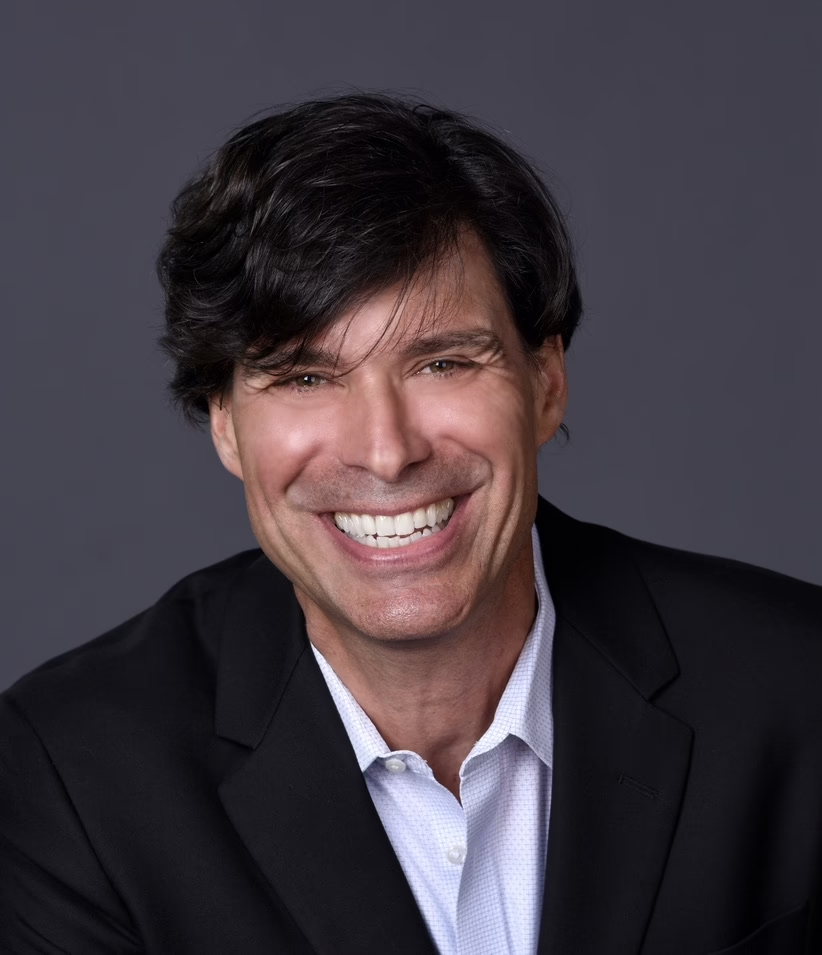
Raymond Chip Tafrate, PhD, is a clinical psychologist and Professor of Criminology and Criminal Justice at Central Connecticut State University. He is on the advisory board of the forensic special interest group for the Association for Behavioral and Cognitive Therapies, the editorial board for Criminal Justice and Behavior, and a member of the Motivational Interviewing Network of Trainers. Dr. Tafrate frequently consults with criminal justice agencies and programs and community mental health centers and has trained thousands of professionals to work more effectively with adolescents and adults with difficult-to-change problems such as criminal behavior and anger dysregulation. He has presented his research throughout North America, Europe, Asia, and Australia. His books most relevant to this topic are:
- CBT with justice-involved clients: Interventions for antisocial and self-destructive behaviors (Guilford Press)