
From Shelf to Screen and on to Salisbury Street: the Rise of Romance Fiction in ENG 281
Since the late eighteenth century, romance novels have been one of the widest read—and discussed—fiction genres. But one significant question endures: what fuels that popularity?
This “big question” has attracted more attention with romance becoming the highest-grossing fiction genre and its print sales continuing to skyrocket—more than doubling from 2020 to 2023. Between 2022 and 2023 alone, the genre generated more than a billion dollars in revenue, and it shows no signs of slowing down as new adaptations of print works drive sales and awareness.
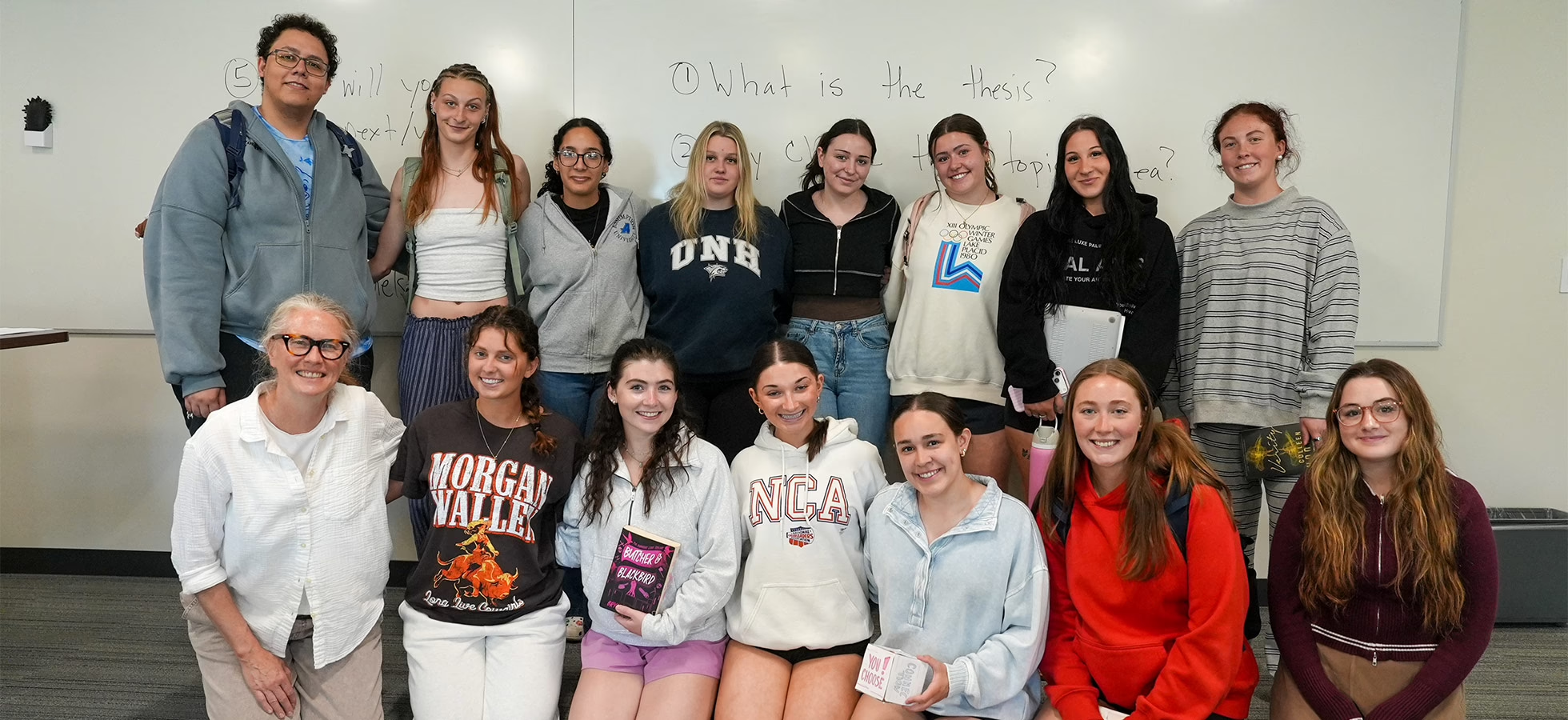
In the spring semester, Associate Professor of English Rachel Ramsey helped students consider this question by immersing them in the genre through a new section of her Women in Literature course, called the Rise of Romance Fiction.
“Since 2020, there’s been a reckoning in the industry,” Ramsey says. “Things like e-publishing have really removed the gatekeeping on certain kinds of publishing and have empowered women writers and writers that are not traditionally represented in the industry. It’s been an interesting moment in time.”
The course examined a full history of romance novels and their tropes, from Shakespeare to today, and the culture around the genre, including readers’ expectations of the novels and publishing history. Students also examined the connection between women and the romance novel, with discussions about women as authors, readers, and main characters.
“I wanted to do the course in a couple of different ways,” Ramsey says. “One of which was to read the genre historically, in stories with tropes and formulas that actually go back to Shakespeare—enemies to lovers, love at first sight, forced proximity…we think of these tropes as being completely modern, but they actually have earlier origins.”
The class began with excerpts from Shakespeare’s Much Ado About Nothing, an early example of enemies to lovers in the story of Beatrice and Benedick, and The Taming of the Shrew, an early example of the arranged marriage trope. They then dove into their first full-length novel, one of the most popular romance novels of all time—Pride and Prejudice by Jane Austen.
At the same time, the class read excerpts from A Natural History of the Romance Novel by Pamela Regis, framing many questions surrounding the genre, including the skepticism it receives and the components that make for a true romance novel.
Students dove into more full-length novels including The Viscount Who Loved Me, a #1 New York Times Best Seller by Julia Quinn and the originally self-published Half a Soul by Olivia Atwater. These works exemplify subgenres of romance with both enduring and rising popularity, from regency romance to romantasy (romantic fantasy). Alongside their reading of The Viscount Who Loved Me, students analyzed scenes from the second season of Bridgerton, comparing page to screen in Netflix’s five-time Emmy winning adaptation.
A choice between three very popular contemporary hockey romance novels—one of the most popular romance categories—was next on the syllabus: Runaway Bride and Prejudice by Emma St. Clair, The Deal by Elle Kennedy, or Heated Rivalry by Rachel Reid, with each group hosting its own book cub and literary discussions.
Final presentation options included choosing to add a new a book for the syllabus that they felt captured a missing piece of the genre, analyzing a television or movie adaptation of something read in class, and answering the “big question” about why people read romance.
Deana Korkidis ’26 wanted to add a book that took place after happily ever after: After I Do by Taylor Jenkins Reid. “A lot of the novels we read ended with the couple getting together,” she said. “This one shows us as readers how to grow—how to work on ourselves and our relationships by showing what really happens after the end of a love story.”
Students who sought to address the “big question” met a distinct challenge—answering an enduring question that fascinates fans and skeptics alike—with an emphasis on the hope that romance fiction inspires.
Sarah Trumm ’28 framed the genre like a house, with each room providing a different component of every romance novel—communication, psychological safety, etc. The foundation of the house was the so-called HEA Contract—the idea that characters in every romance novel have a guaranteed “happily ever after”, no matter the steps it takes to get there.
“Rather than just turn off their brains while reading, people have a desire to have their emotions validated. Romance novels are built on a house of hope,” said Trumm.
From the political tensions of Shakespeare’s time to modern anxieties, romance offers a welcome respite in which hope for a joyful outcome is not only possible but promised. Love is a force, as the Bard famously writes in Sonnet 116, that “looks upon tempests and is never shaken.”